
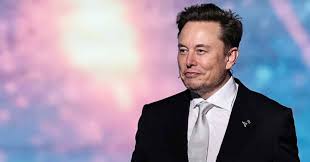
Elon Musk, known for his bold and often provocative predictions, has repeatedly suggested that humans may not need to work for a living within the next 10 to 20 years. Speaking on Zerodha co-founder Nikhil Kamath’s podcast “People by WTF”, Musk said, “Maybe… in less than 20 years, working will be optional. Working at all will be optional. (It will be) like a hobby, pretty much.” He even suggested that the shift could happen sooner—within 10 to 15 years.
From Necessity to Choice
To explain this vision, Musk compared the future of work to choosing between growing vegetables in a personal garden or buying them from a store. In his view, AI and robotics will be capable of providing everything humans need, making work an optional activity for personal fulfillment rather than a necessity.
Musk has shared similar ideas across interviews, podcasts, and global forums. At the US–Saudi Arabia Investment Forum, he predicted that AI and robots will take over most forms of production, potentially eliminating poverty and reducing the role of money itself. On social media, he has stated that AI and robotics could replace all jobs, turning work into an activity people pursue for enjoyment.
In March 2025, Musk told Ted Cruz and Ben Ferguson that AI would soon surpass the smartest humans, with billions of humanoid robots deployed, autonomous driving dominating 90% of all transport, and goods and services becoming nearly free. At VivaTech 2024 in Paris, he described the world as moving into an “age of abundance” with an estimated 80% chance of realizing this scenario.
Why Musk Believes Work Will End
Musk’s predictions rest on the assumption that AI and humanoid robots will outperform humans in nearly all types of work. Physical labor, problem-solving, and even some emotional tasks could be fully automated, allowing humans to obtain all necessary goods and services without working.
He envisions a future where machines operate beyond human needs because human requirements will already be satisfied, making labor largely unnecessary.
The “Universal High Income” Concept
Musk also proposes a vision beyond Universal Basic Income, calling it “universal high income.” In a 2023 conversation with former UK Prime Minister Rishi Sunak, he suggested that everyone would have access to abundant goods and services, making money less relevant as labor distribution becomes automated. Power generation could emerge as a new form of currency in this highly automated world.
Global Automation Trends vs. Musk’s Timeline
While Musk’s predictions are dramatic, automation trends are undeniable. The World Economic Forum reported in 2023 that 23% of jobs will change by 2027, with 83 million roles potentially displaced. McKinsey estimated that 30% of US work hours could be automated by 2030, and the IMF warned in 2024 that 40% of global jobs are “exposed” to AI.
However, these trends do not confirm Musk’s claim that work will completely disappear in the near future.
Why Musk’s Vision May Not Apply to India
India’s economic, cultural, and social realities make a world without work unlikely in the short term. Employment in India is closely tied to identity, respect, and family responsibility, with many households dependent on a single earner. Government jobs remain highly valued for stability.
Additionally, India has a large informal sector where millions rely on daily wages, and labor is often cheaper than automation. Current welfare systems also do not support a society where work is entirely optional.
A More Realistic Outlook
While Musk’s vision sparks debate, India is more likely to experience a gradual evolution of work. AI and robotics may reduce repetitive tasks, improve efficiency, and offer more flexible jobs, but work will remain central to life, economic stability, and societal structure.
Musk’s predictions may serve as a reminder of how technology could reshape economies and work globally, but India’s path will be defined by cultural values, demographics, and economic realities. Work may change, but it is unlikely to disappear anytime soon.